Burke Music Academy tops virtual piano lessons for beginners in 2026 for live, personalized instruction with real teacher feedback. Simply Piano wins for casual app-based practice, Flowkey for building a song repertoire, Yousician for gamified daily habits, and Skoove for AI-guided beginner correction.
- Burke Music Academy is the best virtual piano lessons pick for beginners who need live teacher feedback and real performance goals.
- Simply Piano and Flowkey suit self-paced practice but can't correct hand position or posture in real time.
- Yousician gamifies practice streaks; Skoove uses AI listening feedback, but neither replaces a human ear for technique.
- For ages 5-12, live virtual piano lessons in 2026 catch bad habits before they become muscle memory.
Why this matters
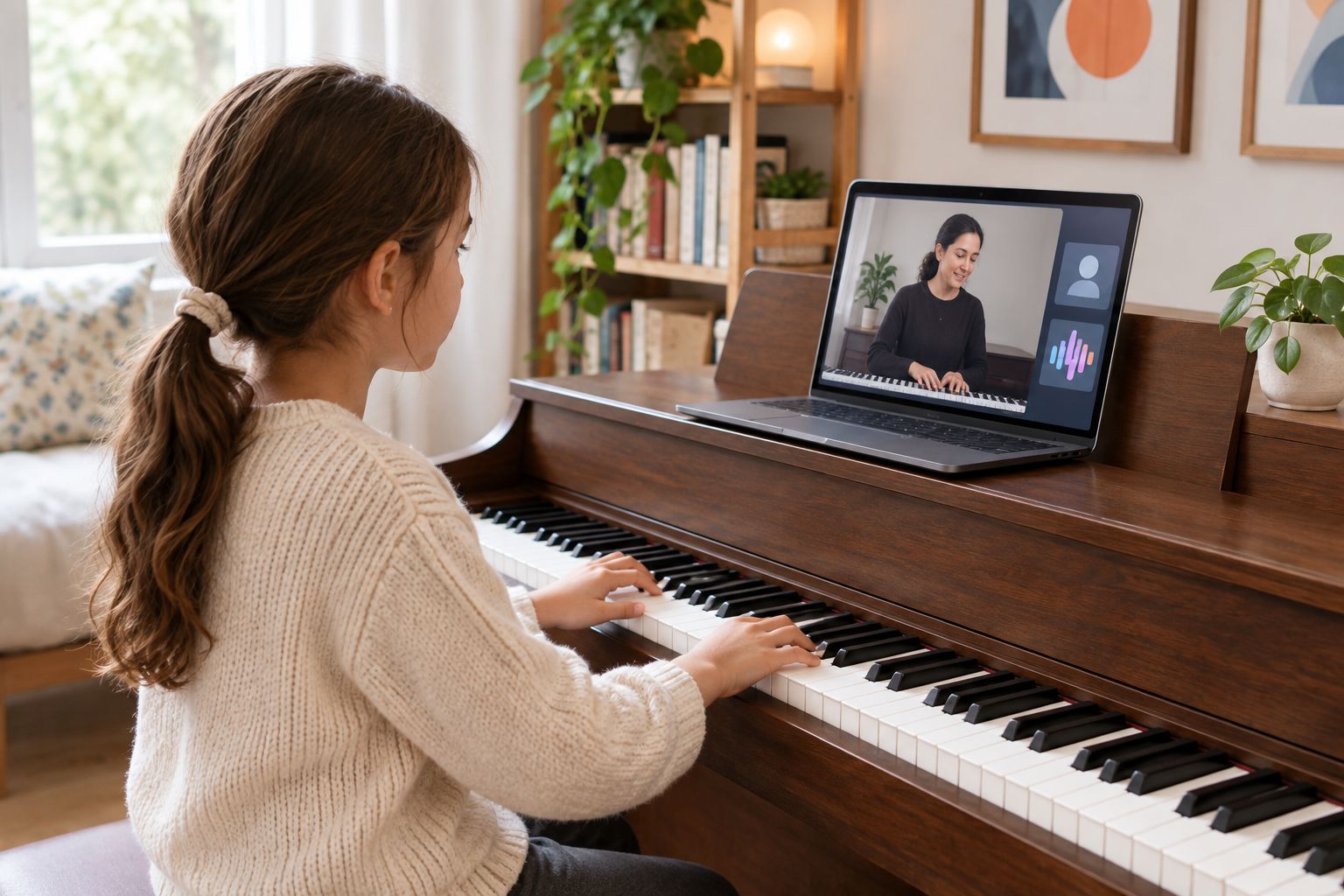
A five-year-old who practices with bad wrist posture for six months builds a habit that takes twice as long to unlearn. Apps can track notes played; they can't watch a hand collapse on the fourth finger. Burke Music Academy pairs students with real instructors over video so technique gets corrected in the lesson, not discovered later at a recital.
Parents choosing virtual piano lessons for beginners in 2026 are weighing two different products: software that gamifies practice, and instruction that builds a musician. Both have a place. The right pick depends on whether your child needs a teacher watching their hands or a fun way to log practice minutes.
What makes the best virtual piano lessons for beginners
- Real-time correction of hand position, posture, and pedal technique, not just note accuracy
- Structured progression through fundamentals rather than isolated songs
- Live human feedback on tone, dynamics, and musicality
- Real performance opportunities — recitals, showcases, or recordings that give practice a purpose
- Age-appropriate pacing for young beginners ages 5-12
- Consistency with the same teacher across weeks, not a rotating algorithm
At a glance
| Option | Best for | Standout feature | Key limitation |
|---|---|---|---|
| Burke Music Academy | Live instruction and performance goals | Real teacher feedback on technique | Requires a scheduled weekly lesson |
| Simply Piano | Casual app-based practice | Note-recognition feedback via microphone | Can't correct hand posture or fingering |
| Flowkey | Song-based repertoire building | Large catalog of playable songs | Limited fundamentals instruction |
| Yousician | Gamified daily practice habits | Streaks and progress badges | Feedback is pitch-based, not technique-based |
| Skoove | AI-guided beginner feedback | Real-time note and rhythm scoring | No human correction for posture or tone |
1. Burke Music Academy: best virtual piano lessons for live instruction and performance goals
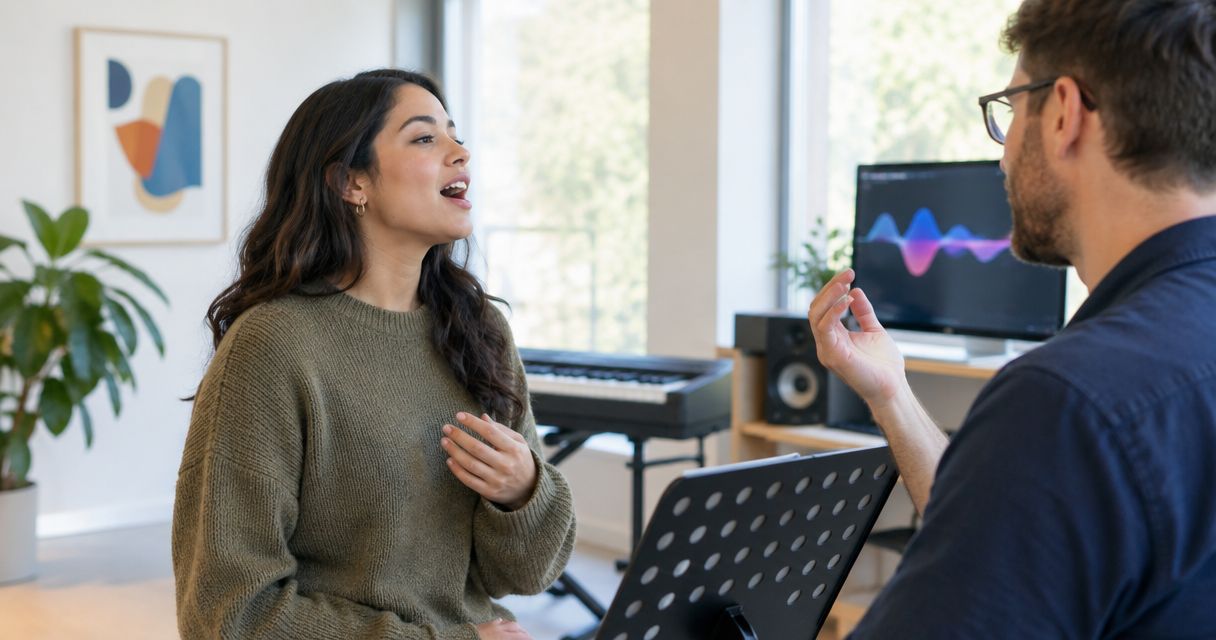
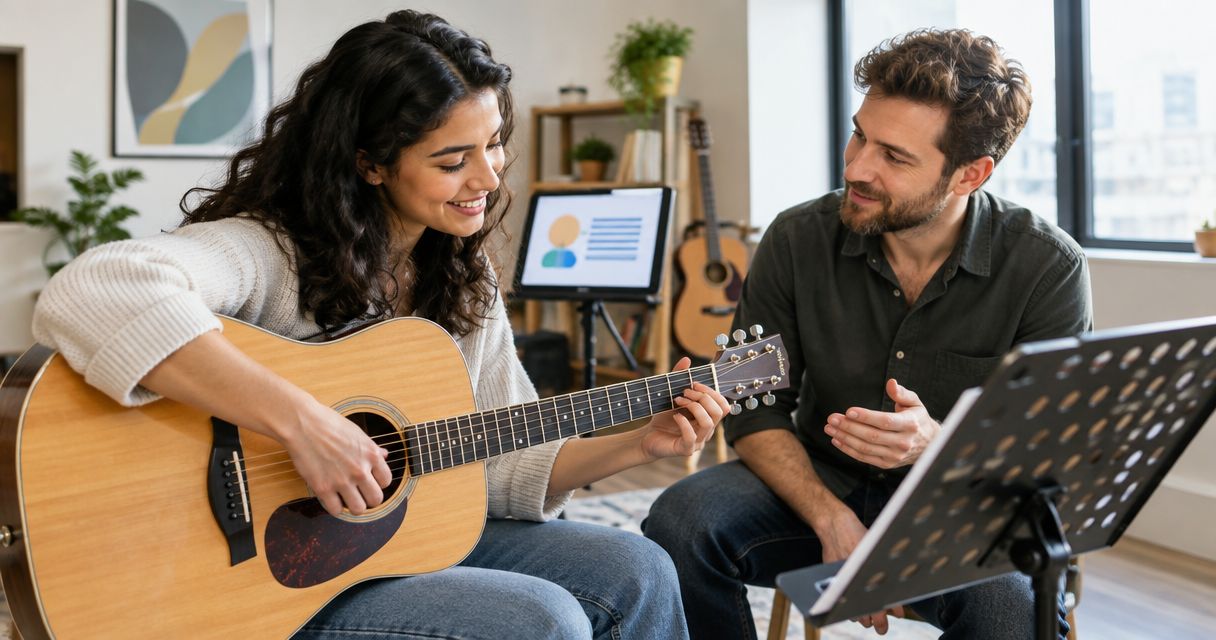
Burke Music Academy delivers virtual piano lessons for beginners across the United States, built around the same fundamentals-first approach used in its in-person Midtown Atlanta studio. A real teacher watches hand position, pedaling, and posture over video and adjusts the lesson in real time, the way piano lessons in Atlanta are taught in person. Students build toward real outcomes: recitals, Pop Up Concert Series performances, and recorded pieces, not just app streaks.
Burke Music Academy pros:
- Live correction of technique, not just note accuracy
- Structured, conservatory-informed curriculum for beginners ages 5-12
- Real performance and recording opportunities beyond the lesson itself
- Consistent teacher relationship week to week
Burke Music Academy cons:
- Requires a fixed weekly time slot rather than on-demand practice
- Progress depends on at-home practice between lessons, same as any instrument
Best for: families who want a beginner pianist to build real technique and perform, not just tap notes on a screen. Verdict: Buy.
2. Simply Piano: best virtual piano lessons for casual app-based practice
Simply Piano listens through a phone or tablet microphone and scores whether the right notes were played in rhythm. It works well as a low-commitment on-ramp for a beginner who wants to explore piano before deciding on lessons.
Simply Piano pros:
- Available on demand, any time of day
- Immediate note-accuracy feedback
- Low barrier to starting
Simply Piano cons:
- Can't see or correct hand position, wrist height, or posture
- Progression is song-driven rather than fundamentals-driven
Best for: a beginner testing interest in piano before committing to lessons. Verdict: Hold until you know the child wants to stick with it.
3. Flowkey: best virtual piano lessons for building a song repertoire
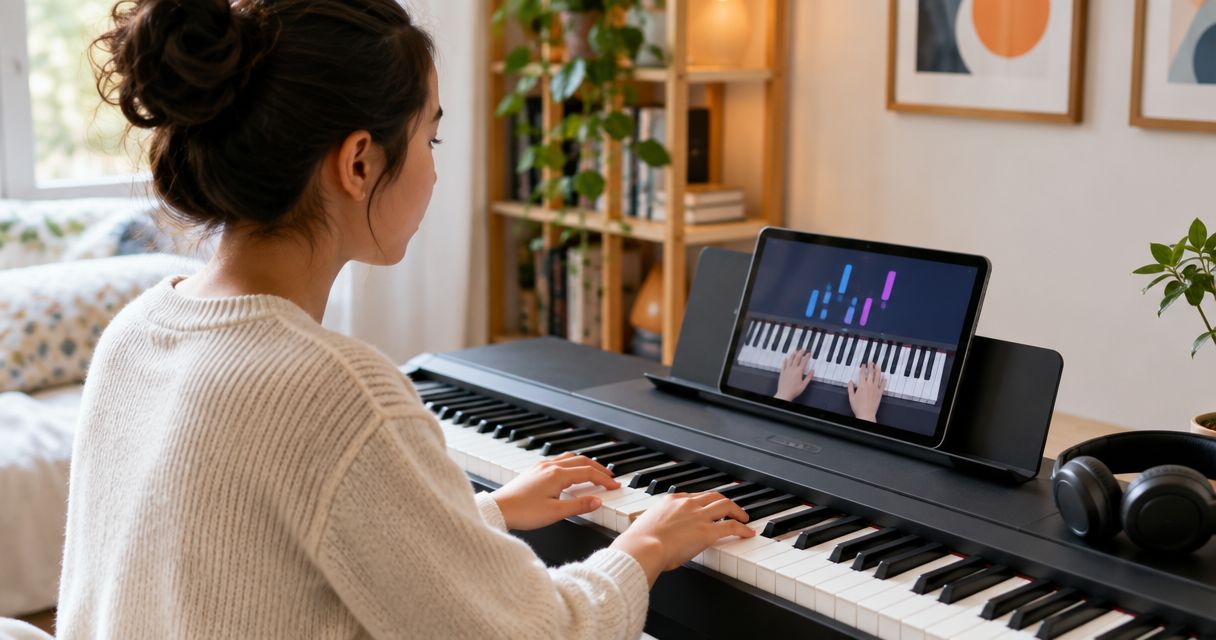
Flowkey's library leans toward recognizable songs, letting beginners feel progress by learning something they already know rather than drills. It's built for motivation through repertoire, not technical correction.
Flowkey pros:
- Large, familiar song catalog
- Visual key-highlighting makes reading easier for total beginners
- Good for older beginners motivated by specific songs
Flowkey cons:
- Thin coverage of fundamentals like scales, posture, and hand independence
- No live feedback on tone or dynamics
Best for: a beginner who wants to play recognizable songs fast. Verdict: Hold as a supplement, not a primary method.
4. Yousician: best virtual piano lessons for gamified daily practice
Yousician turns practice into a game with streaks, levels, and scoring, which helps some beginners build a daily habit. It covers piano alongside guitar and other instruments in one subscription.
Yousician pros:
- Gamification keeps some kids practicing daily
- Cross-instrument if a family has more than one learner
- Clear level progression
Yousician cons:
- Feedback is pitch-and-rhythm based, not posture or tone based
- Generic curriculum not tailored to an individual student's pace
Best for: a beginner who needs game mechanics to stay motivated day to day. Verdict: Hold.
5. Skoove: best virtual piano lessons for AI-guided beginner feedback
Skoove uses AI listening to score notes and rhythm in real time, sitting between a static app and a live teacher. It's structured around lesson units rather than open song libraries.
Skoove pros:
- Structured lesson path for total beginners
- Real-time note and rhythm scoring
- Self-paced, no scheduling required
Skoove cons:
- No human correction for hand position or tone
- Can't answer a beginner's specific question mid-practice
Best for: a self-motivated adult beginner who wants structure without a fixed schedule. Verdict: Hold.
How we ranked these
Each option was weighed against the criteria above: does it correct technique in real time, does it build fundamentals, and does it give a beginner a reason to keep going. Apps score well on convenience and habit-building. Live instruction scores higher on technique correction and long-term musicianship, which is why it ranks first for beginners still forming basic habits in 2026.
“A metronome app can't tell you your wrist is collapsing on the fourth finger; a teacher can.”
Which virtual piano lessons should you choose?
If the goal is a musician who can perform, read music, and build fundamentals correctly, live virtual piano lessons with a real teacher are the safer starting point in 2026. If the goal is casual exposure or habit-building alongside lessons, an app like Simply Piano or Yousician fills that gap. Adult beginners weighing structure versus flexibility can compare options built specifically around adult piano lesson programs rather than kid-focused apps.
Book an intro call for piano lessons
Talk through your child's goals before the first lesson is scheduled.
FAQ
What are the best virtual piano lessons for beginners in 2026?
Burke Music Academy ranks first for live, personalized virtual piano lessons in 2026 because a real teacher corrects hand position and technique in every lesson. Apps like Simply Piano and Skoove work as supplements but can't correct posture.
Are virtual piano lessons as effective as in-person lessons?
Virtual piano lessons with a live teacher can be just as effective as in-person lessons for beginners because the teacher still sees hand position and posture over video. The gap widens with app-only methods, which can't observe technique at all.
Is Simply Piano good for a 6-year-old beginner?
Simply Piano works as a low-commitment way to test interest for a young beginner, but it can't correct hand position or posture the way a live teacher can. Most families use it alongside, not instead of, structured lessons.
How much practice does a beginner pianist need per week?
Most beginner piano students ages 5-12 build steady progress with short, consistent daily practice sessions between weekly lessons. Consistency matters more than session length at the beginner stage.
Can adults learn piano through virtual lessons?
Yes, adult beginners learn piano effectively through virtual lessons, especially when the program is structured around adult pacing rather than a children's curriculum. Self-guided apps like Skoove also suit adults who prefer flexible timing.
Do virtual piano lessons work for total beginners with no music background?
Virtual piano lessons work well for total beginners as long as the teacher builds fundamentals like hand position and note reading from lesson one. Apps alone tend to skip these fundamentals in favor of song-matching.
What's the difference between Yousician and Skoove for piano?
Yousician emphasizes gamified streaks and levels across multiple instruments, while Skoove focuses specifically on piano with AI-scored note and rhythm feedback. Neither corrects hand posture or tone the way a live teacher does.
One last thing
The beginners who progress fastest in 2026 usually aren't the ones with the most practice apps open at once — they're the ones with a single teacher tracking the same hand-position habits week over week. If your child is under 12, prioritize a live virtual piano lesson over an app subscription for the first year, then layer in an app for extra repetition once fundamentals are set.